
Hardy Deeds and the Records They Make
Every conveyance in Hardy County passes through the County Clerk's office. There the deed and its companions enter the land-record trail together. A deed proves a transfer, nothing more. It does not promise that every claim was cleared. It does not promise the boundary was ever surveyed. A deed of trust, lien, plat, release, or estate filing can sit beside the transfer. It can change what the land actually carries. No online document-type menu appears. Ask the Clerk to confirm a category before relying on a search filter.
| Deed Type | What It Does | Common Use |
|---|---|---|
| Deed of conveyance | Records the described transfer from grantor to grantee | Confirm a sale, gift, or other transfer |
| Deed of trust | Records a security instrument against the property | Check the related release or satisfaction |
| Plat | Records a mapped subdivision, lot, or survey reference | Match lot and block to the deed description |
| Lien | Records a claim associated with land or its owner | Look for a later release or court action |
| Release | Records a release of a prior instrument or claim | Compare its book/page reference with the original |
These instruments answer different questions. A deed names a transfer. A deed of trust or lien concerns an obligation. Match any release to its earlier instrument using party names plus the book and page or instrument number. A plat can help you locate a lot, but its map lines never replace the legal description in the deed itself.
Hardy's Grantor-Grantee Trail
The grantor-grantee index follows parties through recorded land instruments. It is the backbone of any deed search in Hardy County. The county confirms that its subscription system covers deeds, deeds of trust, and plats. It also covers liens, releases, wills, and estate documents. Details vary. Vendor labels, search controls, coverage years, and result sorting are not published on the county page. So confirm any specific field or date range with the live portal or the Clerk before counting on it.
| Search Detail | What Research Confirms | What to Verify |
|---|---|---|
| Grantor / grantee | Party-based land-record search is the relevant route | Exact field labels and role selector |
| Document type | Deeds, deeds of trust, plats, liens, releases, wills, and estate documents are listed | Full dropdown and instrument names |
| Recording date | Clerk records documents in the land index | Available date range and filters |
| Book and page | Hardy tax tickets can show a deed book and page | Exact result label and image link |
| Images and export | Online system is subscription based | Image charge, result cap, sort, and export |
Save the recording reference. Keep it beside the parties and date from any portal result. When an online search comes up empty, counter staff can search by grantor, grantee, book and page, map and parcel, recording date, or legal description.
Hardy's Deed Index Has a Subscription Fee
The Clerk sets the subscription rates: $5 for one day, $50 for one month, $150 for six months, and $200 for a full year. That fee covers the online records service itself. The per-image or copy charge is not posted in the page text. Confirm current terms with the Clerk before you buy. The vendor's direct address is not listed. Start at the official Hardy County Clerk page and follow its Online Records link.
The counter is the other route. The Clerk's office sits at 204 Washington Street, Room 111, Moorefield. It is open 9 a.m. to 4 p.m. Monday through Friday. Call 304-530-0250 or email hdyclerk@court.state.wv.us with a specific request. Include a party name, parcel or map, book and page, date, and record type. That helps staff route it. Certified-copy charges and requirements appear in the Clerk's linked fee schedule.
A subscription and a counter visit are separate paths, and one does not replace the other. Paying for the index does not mean every historic image is online. It also does not mean a displayed instrument counts as certified.
Trace a Hardy Deed Chain by Party
Start with the latest known grantee. Find the deed that conveyed the land to that person or entity. Read the grantor's name. That grantor was once a grantee too, so search the name again and keep working back to the period that interests you. A chain does not rule out errors.
- Use the current parcel ID, legal description, or owner name to find the latest recorded deed.
- Write down the grantee, grantor, recording date, legal description, and book/page reference.
- Search the grantor as an earlier grantee and compare the description to the same land.
- Repeat through the index; if the year is outside online coverage, ask the Clerk about deed books or other holdings.
- Grantor
- The party named as transferring the property in an instrument.
- Grantee
- The party named as receiving the property in the instrument.
- Chain of title
- The sequence of recorded transfers tied to the same land.
- Book and page
- A volume and page reference; Hardy tax tickets show this for deeds.
- Instrument number
- A separate document identifier; confirm whether the Clerk index uses it.
Hardy's Historic Survey Books Are Separate
Hardy County advertises a Historic Survey Books search. The project drew much of its funding from the West Virginia Archives and History records-management and preservation board. It is not the paid deed index. A named survey is a clue, not proof that a conveyance ever took place. Confirm ownership in a deed book or recorded instrument.
The county page gives no exact date span or field list for the survey books. Start from the Clerk's site. Note the survey name and description, then ask whether a matching deed or plat exists. Old tracts need extra care. Keep the district, stream, road, ridge, or farm name, because modern street addresses may never appear in the record.
Libraries fill the local-history gap. Hardy County Public Library reports local history, genealogy, records, and some funeral records. Directory and newspaper years are not listed. Ask staff first. Verify any run before you rely on it.
Hardy Land Records Pre-Date the County
Hardy County was formed from Hampshire County in 1786. Anything earlier may sit in Hampshire records. Some chains reach back to a colonial Virginia system instead of a modern Hardy index. The FamilySearch catalog lists Hardy County land-tax material covering 1783 through 1900. That collection can tie a named owner or tract to a later land-book description. Image and access status varies, so plan accordingly.
Comparing sources pays off for historic ownership. Match a deed description against a land book and the Historic Survey Books index. A tax roll shows an owner's land and tax context. It is not a conveyance. The Clerk's website links online land books that include ownership, historical taxes, and land descriptions. The online year range is not published.
What if the current index stops before your years? Ask the Clerk about book and counter access first. Then consult the Archives or the catalog holdings. Hardy researchers should separate an older collection's existence from the years actually searchable online. The earliest paid-index year is simply not stated.
Hardy Recording and Copy Costs Differ
West Virginia's recording-fee summary for deeds of conveyance, deeds of trust, or a memorandum of deed of trust lists $32 for the first five pages. Each added page costs $1. Preservation-fee rules apply to longer documents. The Hardy Clerk links a county recording-fee spreadsheet. Check that spreadsheet before preparing a filing. The state summary is no substitute for the local schedule.
Recording a new instrument and ordering a copy of an existing deed are different transactions. The Clerk sets the certified-copy cost and requirements. No current copy price is published, so assume nothing. For an official copy, give staff the recording reference. Then ask whether the request goes in person, by mail, or through the online service.
Hardy Court Dockets Can Lead to Land Files
Foreclosures, quiet-title disputes, partitions, and lien cases often involve a court record alongside a Clerk filing. The West Virginia Judiciary offers statewide circuit and magistrate search entry points. Circuit records are the stronger path for equity matters. Think foreclosure litigation, quiet title, boundary disputes, partition, and lien enforcement. Registered users may download public documents for a nominal fee. Sealed or restricted files are not public.
Magistrate case search became free statewide in 2024. It returns up to 30 records for a name or case number. The result is docket information only, not the full document file. Request documents from the clerk in the county where the case was filed. The court portal can locate a case lead. The Clerk land index shows a recorded lis pendens, lien, release, or later deed. Use the two together.
The West Virginia Judiciary court-record access page is the statewide starting point for circuit matters.
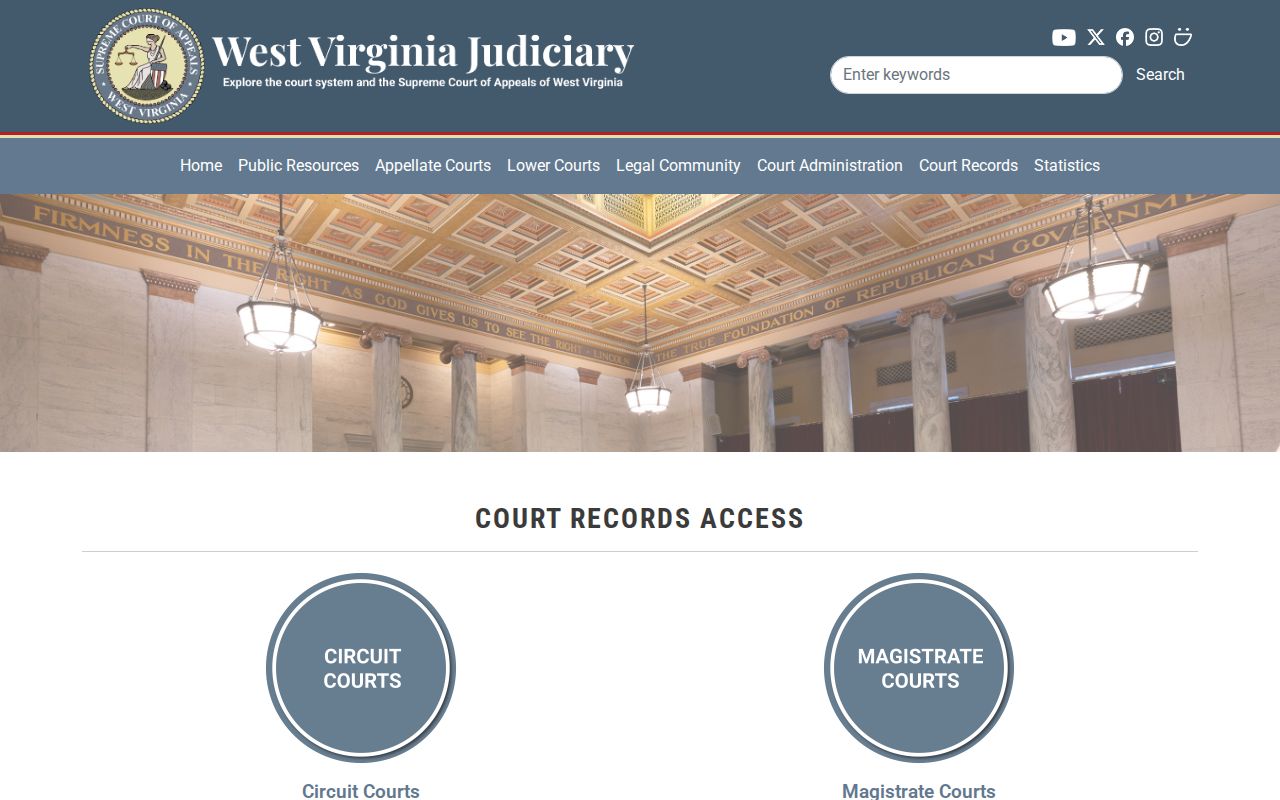
Carry any docket reference to the local clerk for the full file. A recorded instrument belongs in Hardy County Clerk records. The free magistrate search is another case-finding route. Open the Magistrate Case Record Search for a name or case number.
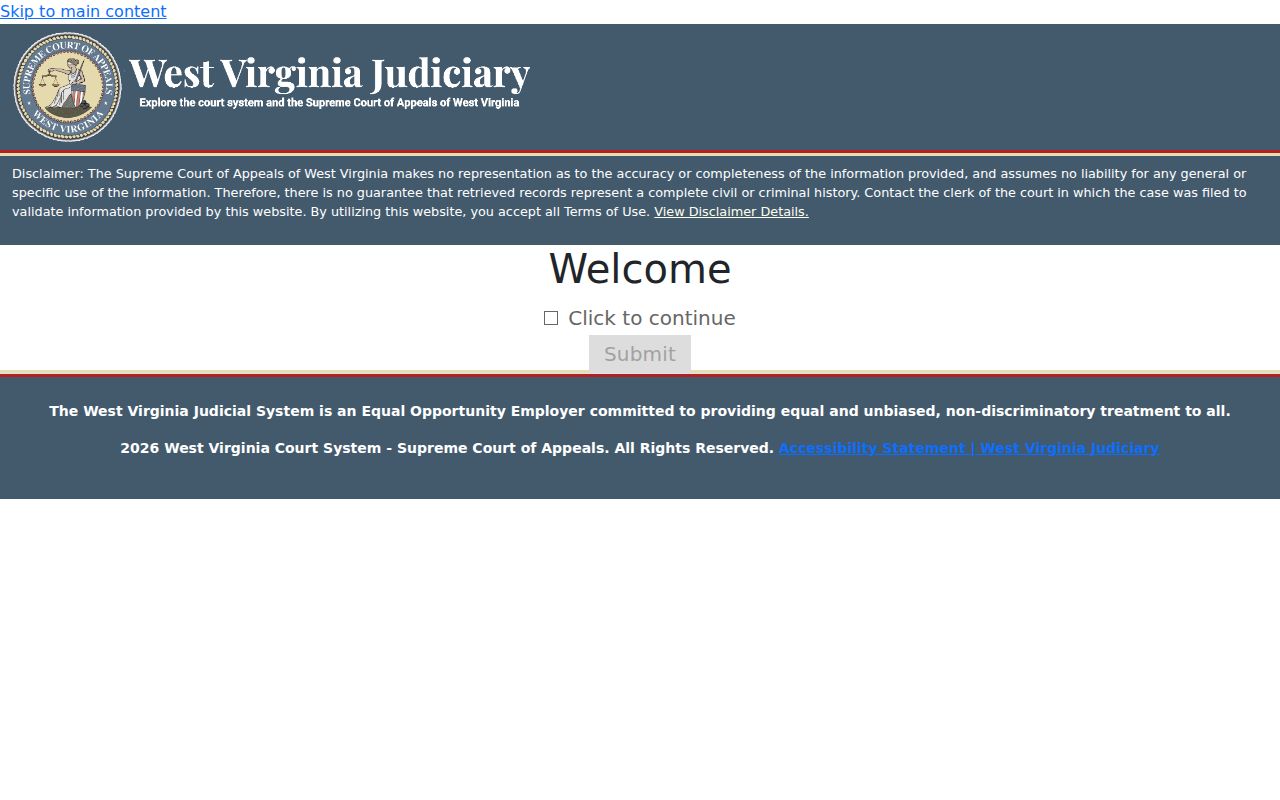
A search result identifies the docket; the clerk supplies the actual documents.
Request a Hardy Deed Copy
Start with the recording reference when requesting a copy. Give the Hardy County Clerk the parties and parcel or map. Include the legal description, recording date, and book/page. The Clerk's office sits at 204 Washington Street, Room 111, Moorefield. Counter requests run 9 a.m. to 4 p.m., Monday through Friday. The paid index may offer online access. Its exact image charge and earliest year are not published.
For a certified copy, follow the Clerk's current fee schedule. Ask what request details are required. Recording fees for a new instrument are separate from copy fees. A portal search may miss an older book. An image may also be unavailable. The Clerk's counter, phone, and county page are the reliable fallback. Remember, a public index result is not itself a certified copy.
Recorded, not guaranteed. Hardy deed records show indexed instruments, not a title opinion. Unrecorded interests, indexing mistakes, or later documents can change the picture, so a title search requires a qualified review.