
Start a Hardy Property Records Search
An E-911 address works when that is all you have, but the parcel ID from the West Virginia Property Viewer is a steadier key. Street names, postal towns, and owner spellings all shift over time. The Assessor supplies the tax owner and assessment fields. The Clerk holds the deeds. The Sheriff Tax Office says whether a ticket was paid, discounted, or marked delinquent. These Hardy County sources overlap, and none replaces the others.
Follow one parcel through every office. A mailing address may differ from where the land sits. An online result may list a single owner. The legal description and the newest recorded deed settle those gaps. A map line helps locate a parcel. It is not proof of title or a surveyed boundary.
- Enter the E-911 street address in the WV Property Viewer and note the parcel ID.
- Open the parcel detail and compare the owner, physical address, mailing address, and land description.
- Use the owner or parcel reference to locate the latest deed in Hardy County Clerk Online Records.
- Check the Sheriff tax ticket for the tax year, assessment, payment, or delinquency status.
- Ask the Clerk or Assessor for counter help when an older book, image, or correction is not online.
The Hardy County Offices Behind the Records
Two kinds of answer exist in Hardy County. The Clerk records an instrument. The Assessor and Sheriff keep tax-facing data. The County Clerk is the recording office for deeds, deeds of trust, plats, liens, releases, wills, estate files, and County Commission minutes. The Assessor sets the property value used for taxes and maintains the land books and tax maps. The Sheriff-Treasurer collects the bill and records its payment state, and does not set the assessment.
Hardy County Clerk
204 Washington Street, Room 111
Moorefield, WV 26836
304-530-0250
Hardy County Assessor
204 Washington Street, Room 119
Moorefield, WV 26836
304-530-0202
Hardy Sheriff Tax Office
Tax collection for Hardy County
Contact the office before mailing payment
304-530-0220
Hardy's Clerk Index Sits Behind a Subscription
The County Clerk posts a paid online index covering deeds, deeds of trust, plats, liens, releases, and wills. It also covers estate documents. Subscriptions cost $5 for one day and $50 for one month. Six months runs $150, and a year costs $200. The county page does not publish the online vendor address or exact image charges. Check the live Clerk page before paying or relying on a document image.
Hardy County also keeps a counter route. The Clerk's office is at 204 Washington Street, Room 111, Moorefield. Hours are 9 a.m. to 4 p.m. Monday through Friday. Staff can work from a grantor or grantee name, book and page, or recording date. They can also use a map and parcel or legal description. The earliest online index year is not published. The subscription does not necessarily reach back to when county land records began.
The separate Historic Survey Books link is its own research path. It offers a name-searchable survey index with images. It was built largely with support from the West Virginia Archives and History records-management and preservation program. A survey entry can identify an old tract. It is not a recorded transfer, so confirm ownership in the Clerk's deed books.
Search Hardy Parcels Through the State Viewer
The free WV Property Viewer accepts an E-911 address. It also takes an owner name, parcel ID, geometry, or coordinates. Its address mode rejects rural routes and post office boxes. If an address fails, try an owner name or a known parcel number. The guided parcel search asks for a county and search type. Its whole-number option takes a full ID with or without hyphens. The result list offers an export-as-CSV control. Verify the export contents during use.
Hardy searches also benefit from the Viewer detail panel. A list can show only one owner and the physical address. Opening the parcel reveals more, including the owner mailing address where available. Mailing and situs addresses can differ. A recent purchase may still show the prior owner. The state assessment data refreshes annually rather than at each closing.
The WV Property Assessment home explains where the free search and Viewer tools begin. Its annual release supports a county lookup. For a mistaken or lagging parcel record, the Hardy Assessor remains the local contact.
| Viewer Mode | Information Entered | Hardy Use | Search Limit |
|---|---|---|---|
| E-911 address | Physical street address | Locate a known site and reveal its parcel ID | Rural routes and PO boxes are not accepted |
| Owner or parcel attributes | Name or parcel identifier | Find the tax parcel when the address is unknown | Result list may show one owner only |
| Full parcel number | County, district, map, prefix, suffix, special ID | Carry one parcel between map, assessment, and tax sources | Other systems may shorten the identifier |
| Geometry or coordinates | Selected area, buffer, or location | Review nearby parcels or place a known point | Buffer units and map lines need verification |
Open the WV Property Assessment portal to see its assessment and Viewer entry points.
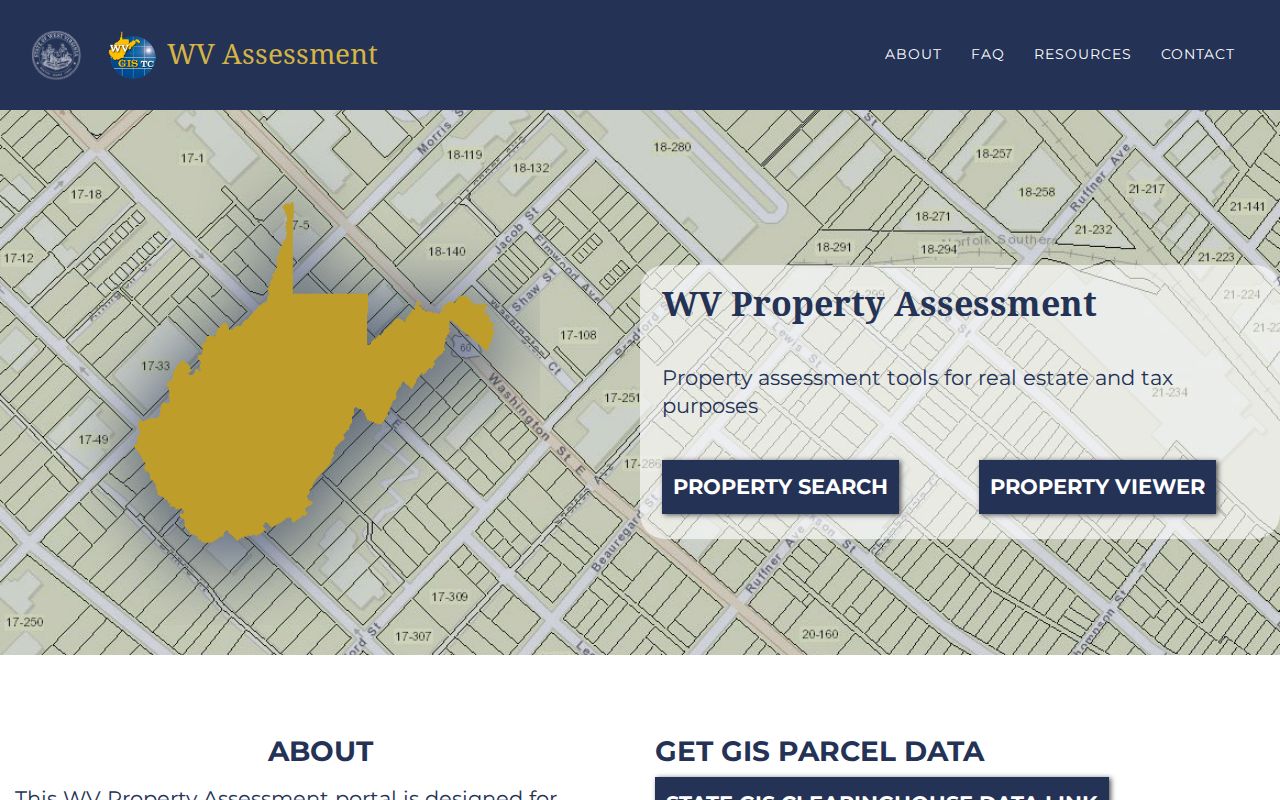
The state portal is the free starting point. Keep the parcel ID handy for the Clerk, Assessor, and Sheriff checks that follow.
Hardy Property Records by Record Type
One property question often needs several sources. The deed documents a transfer. A deed of trust or lien records a claim against the land. The assessment and tax ticket describe the tax account. The map identifies the surface parcel. Hardy County's systems connect through parcel references and legal descriptions. There is no single all-purpose search result.
| Record Type | What It Documents | Kept By | Access |
|---|---|---|---|
| Deeds and estate transfers | Recorded conveyances, wills, estate filings, and references | Hardy County Clerk | Paid online index or Clerk counter |
| Deeds of trust, liens, releases | Recorded security interests and later release instruments | Hardy County Clerk | Paid index; certified-copy fee schedule linked by Clerk |
| Assessment and land books | Owner display, land description, value, exemptions, tax maps | Hardy Assessor / state Viewer | Free online tools and Assessor office |
| Tax ticket and payment | Tax year, ticket, assessed amounts, due or paid status | Hardy Sheriff-Treasurer | Public tax portal, mail, or office |
| Parcel geometry and plats | Surface parcel location, map context, recorded lot or survey | WV Property Viewer / County Clerk | Free map; paid index or counter for Clerk records |
For the instrument and prior owner, walk the deed trail. For value or a bill, use the Assessor and Sheriff. The Hardy County Clerk's land index is subscription based. State parcel and assessment access is free. The detailed Hardy deed records route covers copies and the grantor-grantee search. The property tax records page explains ticket fields and the assessment calendar.
What a Hardy Tax Ticket Can Cross-Reference
The Hardy Sheriff tax ticket packs a surprising number of clues into one screen. Each ticket can carry the year, ticket number, account, class, district, map, parcel, subparcel, and special ID. Owner, care-of line, mailing address, and legal description sit alongside a deed book and page reference. Value fields split land from building value, with gross and net assessment figures. Tax fields show both half-year amounts, plus discount, interest, fees, payments received, balance due, and a delinquency flag.
Those fields let a searcher hop between records without confusing them. A ticket is a payment record, not a deed image. Its owner display can also lag behind a recorded transfer. Treat the deed book and page as a pointer to take to the Clerk. Treat the amount due as a snapshot. For a current balance, open the live ticket rather than a saved copy.
The Hardy Sheriff sample tax ticket shows how these account fields appear together.
A matching book and page points the way to the Clerk. The ticket itself stays what it is: the Sheriff-Treasurer's payment record for that parcel.
Hardy's Assessment Rule and Tax Relief
Hardy County follows a simple assessment rule. The Assessor sets assessed value at 60% of market value. Levy bodies then set the rates, and the Sheriff collects the bill. The county page also links land books. These show ownership, past taxes, and descriptions, plus an electronic tax map. Keep perspective on the numbers. An assessment is a tax measure. It is not a forecast of what a parcel will fetch at sale.
Tax relief exists in two described forms. A homestead exemption cuts $20,000 from assessed value for an eligible qualifying residence. There is also a farm and agricultural exemption process. Eligibility rules, filing steps, and deadlines rest with the Hardy Assessor. Confirm current requirements there before counting on either break. A prior year's value will not reflect a new filing.
The state releases its data annually. If a transfer happened after the latest assessment cycle, the prior owner's name may linger in the Viewer until the next release. Parcel splits can take even longer to show up as digital geometry. The deed or recorded map may have changed. The online layer may not have caught up yet. Ask the Assessor when that happens.
Hardy Parcel Maps Need a Deed Check
The WV Property Viewer draws parcels. It offers identify, geometry-buffer, coordinate, flood-hazard, aerial, and delinquent-land layers. Parcel outlines appear only at close zoom, near a scale of 1:18,056. Clicking a parcel opens basic information. Overlapping shapes may trigger a selection window listing parcel IDs. A buffer search helps you see neighboring parcels. Check the live screen's units and options before judging a buffer's reach. Those settings shape the result.
A West Virginia parcel ID weaves together county, district, map, parcel prefix, parcel suffix, and special ID parts. Other systems sometimes drop pieces or strip leading zeros. Compare the full ID rather than trusting a shortened display. The state also warns that a tax map is a best-fit visualization, not a legal boundary. Deeded acreage governs over calculated GIS acreage. Mineral parcels do not all appear as surface parcels.
Free surface-map images and GIS geodatabase files come through the State Data Clearinghouse. For recorded plats and lot-and-block evidence, the county Clerk is the office to visit. Digital geometry often lags paper changes. A recent split deserves a check in the recorded plat and deed. Check the Viewer as well.
Historic Hardy Land Books Reach Back
Hardy County split off from Hampshire County in 1786. That matters for old land research. Early evidence may live under Hampshire County or under earlier Virginia-era record systems. The Clerk's Historic Survey Books project opens a second route into named tracts. It offers a searchable index and images. These are supported largely by the West Virginia Archives and History records-management and preservation program. It stands apart from the paid deed index. The county page does not list the project's exact date range.
The FamilySearch catalog places Hardy County land-tax material between 1783 and 1900. Access and image availability vary by item. Use the catalog entry to learn what can be viewed or requested. The Hardy County Public Library has roots going back to 1927. It reports local history, genealogy, records, and some funeral records. Its exact directory, obituary, and newspaper holdings are not listed online.
For a historic tract, start with the survey or tax-book name, district, and legal description. Match that to a deed, then carry the description forward to a present parcel ID. An older deed may name no modern street address at all. Tracts were often described by a stream, road, ridge, or named farm instead.
Estate Records Can Explain a Hardy Transfer
Estate paperwork sits in the County Clerk's office right beside the land instruments. When a Hardy owner dies, the estate file names the personal representative, executor, or administrator. It also explains the authority behind any later conveyance. The Clerk handles testate, intestate, nonresident, and ancillary administration for West Virginia real estate. Filers schedule an appointment for estate filings.
A will alone proves nothing about a Hardy parcel. A death record does not either. Match the estate paperwork to the newest deed indexed against the parcel's legal description. The document you want may be an executor's deed. It may also be a personal representative's deed, an heirship affidavit, a transfer-on-death filing, or a court-approved sale. Did the estate open outside Hardy County? Ask the Clerk whether ancillary papers cover the West Virginia land.
Hardy Delinquent Lands and Court Cases
Delinquent land in Hardy follows a published rhythm. The Sheriff Tax Office posts a delinquent list after April 30, and delinquent properties appear each November in the Moorefield Examiner. The Sheriff's sample tax ticket marks delinquency after April 1 in the year following issuance. Those dates can shift. Before acting, read the current ticket, the Tax Office notice, and the newspaper notice, and the county itself urges sale buyers to get legal advice.
The state's Property Viewer offers a Delinquent Lands layer updated weekly. The State Auditor tracks land returned to the state, sale records, and redemptions. The Viewer describes an eighteen-month redemption window before auction. Still, that state view cannot answer for a specific Hardy ticket or the current notice.
Court cases are the other thread. For foreclosure, quiet title, partition, boundary, or lien disputes, start at the statewide West Virginia Judiciary Court Record Access site for a case lead. Then request the file from the Hardy clerk. Magistrate docket search went free statewide in 2024. Its documents are not online through that search. Registered users may download public circuit documents for a nominal fee. The official access page describes the statewide entry point for circuit records. View West Virginia Judiciary court-record access.
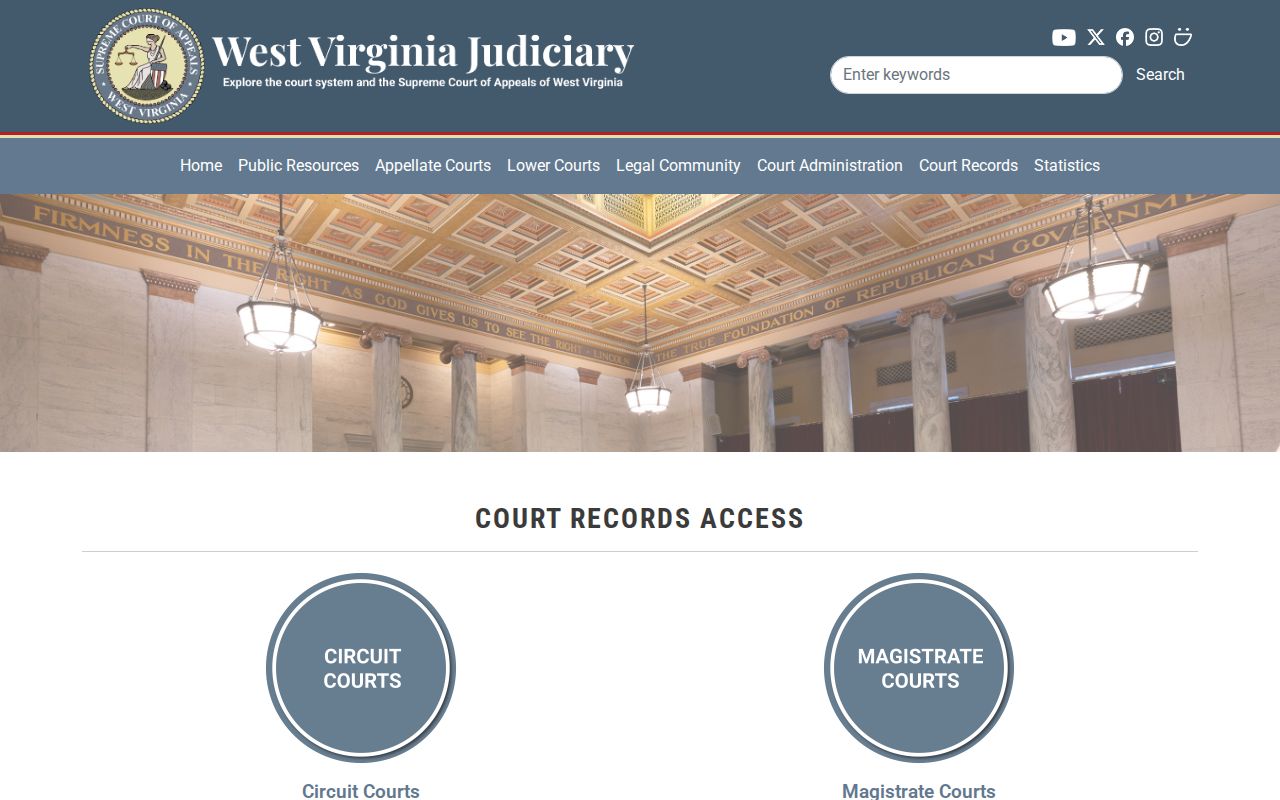
A docket can name the case and its disposition. For the full file or a copy, the local clerk remains the source.
Limits of Hardy Property Records
Hardy County's public records each answer one question. A recorded grantee shows who took title. A tax owner display, an assessment, a lien, a plat, or a court case serves its own purpose on its own date. No single entry certifies current title. None fixes a boundary or estimates a sale price. Indexing can hide a grantee behind an entity, an estate, or a name variant. A map can lag a paper change. Confirm any critical transaction with the custodian, and bring in a title professional or licensed surveyor when the question calls for one.
West Virginia's Freedom of Information Act, W. Va. Code Chapter 29B, opens the same records by request. Ask with reasonable specificity. The custodian must respond as soon as practicable and within five days, excluding weekends and legal holidays, by providing the record, arranging inspection or copying, or denying the request in writing. Fees may cover actual reproduction cost. Search and retrieval labor cannot be charged. Naming the parcel, owner, instrument, tax year, or meeting date makes a request far easier to process.
Put owner information to lawful uses: property research, purchase due diligence, tax review, and civic questions. The Clerk's page includes a Fraud Detection link. Verify office contact details from the county source before answering any payment demand or document solicitation.
Lawful use. Use Hardy property records for lawful research and property diligence. Do not use owner details to stalk, threaten, or harass another person.